

Easy Homemade Italian Bread | Crusty No-Fuss Loaf
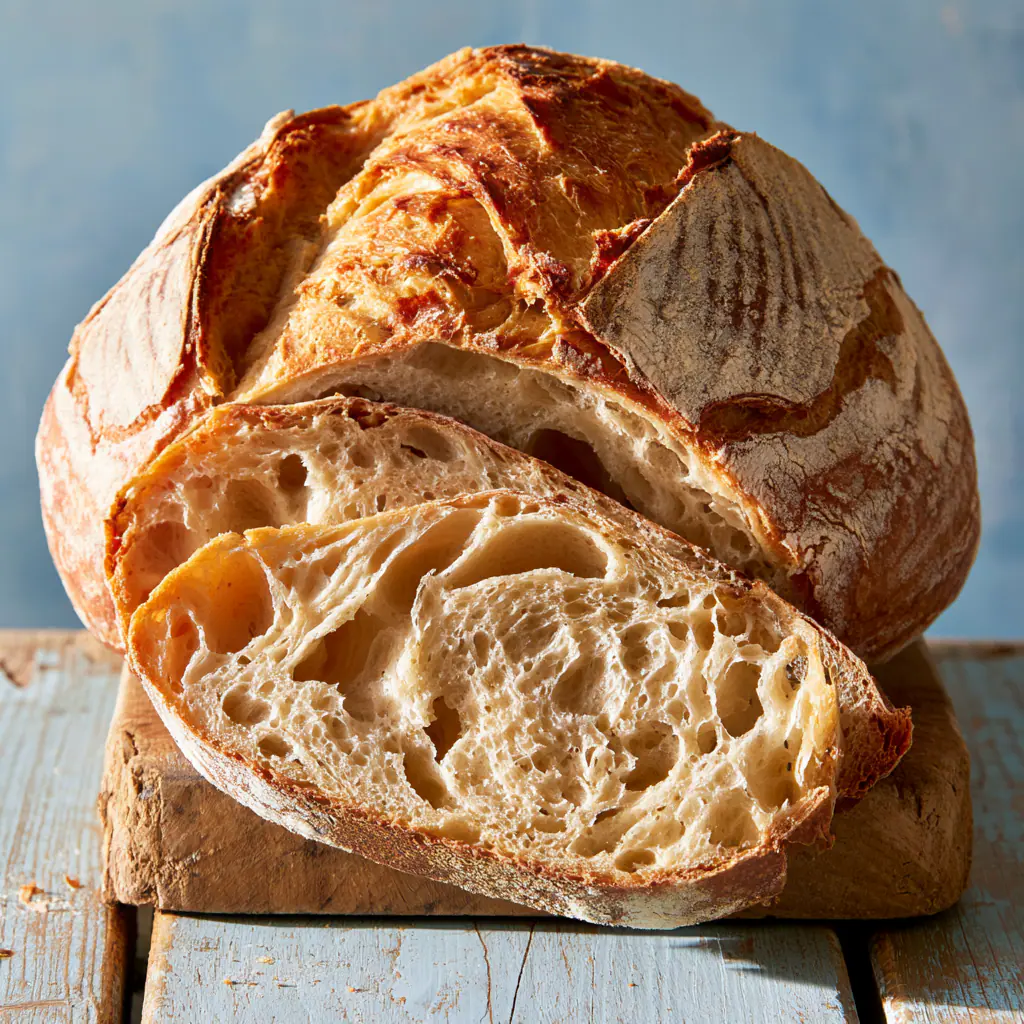
Pull this loaf out of the oven and you'll hear it before you see it: a faint crackling sound as the crust cools and contracts. Inside, the crumb is pale gold and full of irregular holes, soft enough to tear with your hands.
Flour, water, yeast and salt are the only real players here, plus a hot oven and some steam. Give it about 3 hours start to finish, most of it hands-off, for a loaf that works alongside weekend dinners or a simple soup supper.
| Prep | Cook | Total | Servings | Difficulty |
|---|---|---|---|---|
| 30 min | 35 min | 3 h 5 min | 1 loaf (10 slices) | Advanced |
The Key Step
The long, slow rise is what separates this rustic Italian crusty bread from a dense, tight loaf. You want to see the dough nearly triple, with large bubbles visible just under the surface. Press a finger in gently; if the dent springs back slowly and leaves a slight indentation, it's ready.
Don't rush this by cranking the kitchen heat. A cool room and a longer rise (even 2.5 to 3 hours) builds more flavor than a fast, warm proof. When you shape the dough, handle it gently so you don't knock out all that trapped air. Those bubbles are what give you the open, chewy crumb once baked.
Rustic Italian Crusty Bread Ingredients
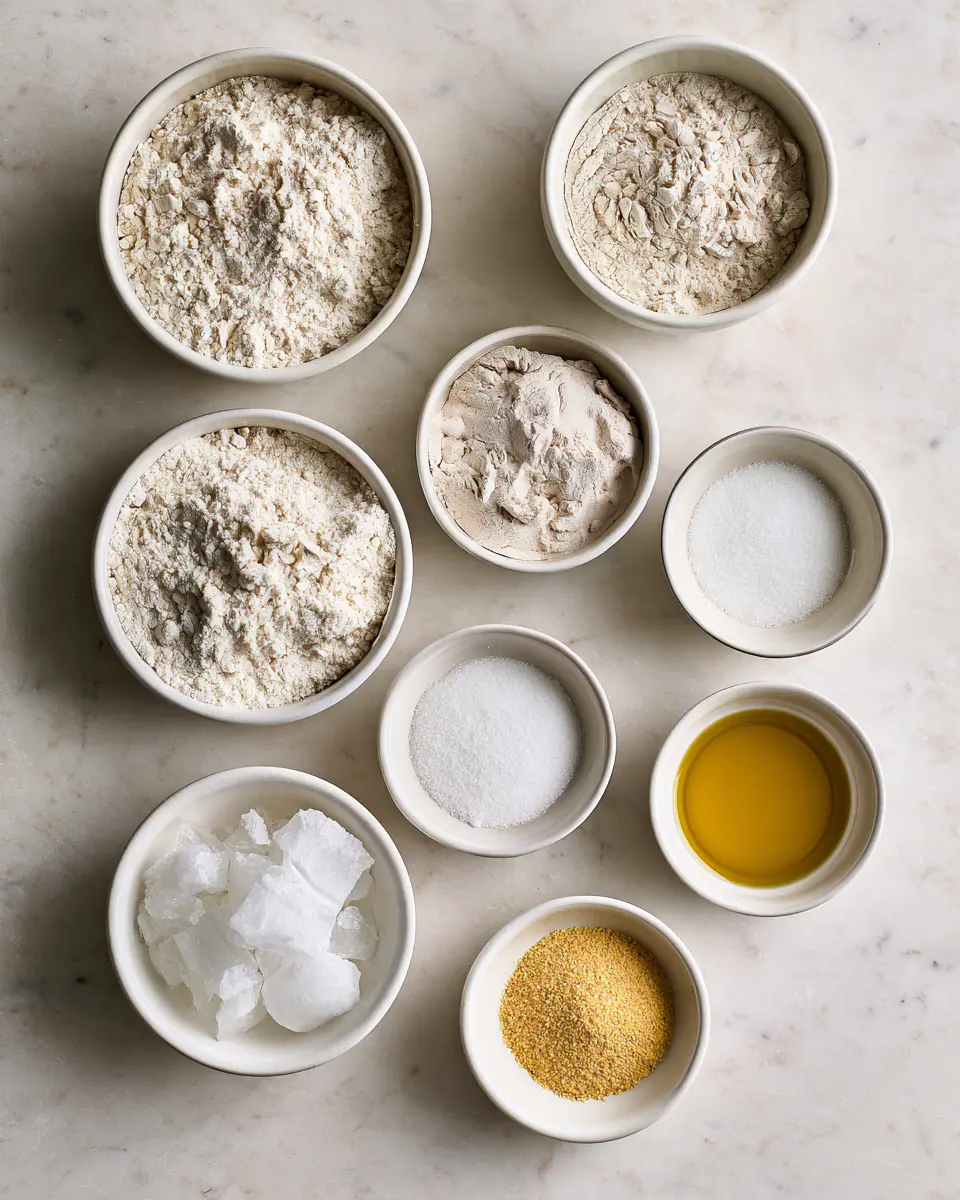
- Bread flour: Gives the dough enough gluten strength for a chewy, structured crumb. All-purpose flour works too, though the crumb will be slightly softer.
- Active dry yeast: Leavens the dough and builds flavor during the long rise. Instant yeast works the same way; just skip the proofing step in water.
- Warm water: Hydrates the flour and activates the yeast. Use water around 105°F, no hotter, or you risk killing the yeast.
- Fine salt: Controls fermentation speed and sharpens the overall flavor. Sea salt or kosher salt both work; just adjust the amount slightly if using coarse crystals.
- Olive oil: Adds a faint fruitiness and helps the crust turn deep gold. A neutral oil works, though you'll lose some of that flavor.
- Cornmeal: Dusted on the baking sheet, it keeps the loaf from sticking and adds a bit of crunch underneath. Parchment paper is a fine alternative if you skip it.
- Ice cubes or water for steam: Creates the humid oven environment that gives the crust its shatter. A spray bottle of water works in a pinch.
Find exact amounts in the recipe card below.
How We Make Rustic Italian Crusty Bread
- Proof the yeast. Stir yeast into warm water with a pinch of sugar and let it sit until foamy on top, about 8 minutes.
- Mix the dough. Combine flour, salt and olive oil with the yeast mixture, stirring until a shaggy dough forms.
- Knead until smooth. Work the dough on a floured surface for 8 to 10 minutes, until it feels elastic and springs back when poked.
- Let it rise. Cover the bowl and let the dough sit until nearly tripled in size, about 2 to 2.5 hours.
- Shape and proof again. Form the dough into an oval or round loaf, place on a cornmeal-dusted sheet, and let it rest 30 to 40 minutes until puffy.
- Score and bake with steam. Slash the top with a sharp knife, add steam to the oven, and bake at 450°F for 30 to 35 minutes until deep golden and hollow-sounding when tapped.
Storage and Reheating
Keep rustic Italian crusty bread at room temperature in a paper bag for up to 2 days; plastic traps moisture and softens the crust. Freeze whole or sliced for up to 3 months, wrapped tightly in foil and a freezer bag. To revive, thaw at room temperature, then warm in a 350°F oven for 8 to 10 minutes to crisp the crust back up.
If You Want to Change It
- Add herbs: Fold dried rosemary or oregano into the dough before the first rise.
- Go whole grain: Swap up to half the bread flour for whole wheat, adding a tablespoon more water.
- Make rolls: Divide the dough into 8 pieces and bake 18 to 20 minutes for individual rolls, great alongside Thanksgiving Garlic Butter Bread Rolls Everyone Fights Over.
- Add cheese: Knead in grated Parmesan for a sharper, savory crust.
- Try a Dutch oven bake: Bake covered for 20 minutes, then uncovered for 10 to 15, for an even crisper shell without misting steam.
Tips for Success
- Measure flour by weight if possible. Scooping with a cup packs in too much flour, leading to a dense, dry loaf; spoon it into the cup and level it off instead.
- Don't skip the steam. It keeps the crust soft long enough for the loaf to expand fully before setting, giving you that crackly shell.
- Check for doneness by sound and temperature. The loaf should sound hollow when tapped on the bottom and read about 200°F on an instant-read thermometer.
Questions About Rustic Italian Crusty Bread
Why didn't my bread rise much?
Your yeast was likely too old or the water too hot, which kills it before it gets started. Always proof yeast in water under 110°F and check the expiration date first.
How do I get the crust extra crunchy?
Adding steam in the first 10 minutes of baking is what gives the crust its shatter, so don't skip the ice cubes or water spray. A longer bake at a slightly lower temperature also dries the crust further for extra crunch.
Can I make the dough ahead of time?
Yes, the dough can rise slowly in the fridge overnight, which deepens the flavor. Let it come to room temperature for about an hour before shaping.
What's the best way to slice it without crushing the crumb?
Let the loaf cool completely, at least 45 minutes, before slicing; cutting too early releases steam and leaves a gummy interior. Use a serrated knife and a gentle sawing motion rather than pressing down.
Rustic Italian Crusty Bread
Ingredients
Method
- Proof the yeast: Stir the yeast and sugar into the warm water and let it sit undisturbed for about 8 minutes, until foamy on top. If it doesn't foam, the yeast is likely dead and you'll need a fresh packet.
- Mix the dough: In a large bowl, combine the bread flour, salt and olive oil with the yeast mixture. Stir with a wooden spoon until a shaggy, sticky dough forms.
- Knead the dough: Turn the dough onto a floured surface and knead for 8 to 10 minutes. It's ready when it feels smooth and elastic and springs back slowly when poked.
- First rise: Place the dough in a lightly oiled bowl, cover with a damp towel, and let it rise at room temperature for 2 to 2.5 hours. It should nearly triple in size and show large bubbles beneath the surface.
- Shape the loaf: Gently deflate the dough and shape it into an oval or round loaf, tucking the edges under to build surface tension. Handle it gently to keep as much trapped air as possible.
- Second rise: Transfer the loaf to a baking sheet dusted with cornmeal. Cover loosely and let it proof for 30 to 40 minutes, until puffy and nearly doubled.
- Preheat the oven: About 20 minutes before baking, preheat the oven to 450°F with a baking sheet or empty pan on the bottom rack for creating steam.
- Score the dough: Using a sharp knife or razor blade, slash the top of the loaf 2 to 3 times at a 45-degree angle, about 1/4 inch deep. This lets the bread expand evenly as it bakes.
- Add steam and bake: Place the loaf in the oven and immediately toss the ice cubes into the hot pan below to create steam. Bake for 30 to 35 minutes, until the crust is deep golden brown.
- Check for doneness: Tap the bottom of the loaf; it should sound hollow. An instant-read thermometer inserted into the center should read about 200°F.
- Cool completely: Transfer the bread to a wire rack and let it cool for at least 45 minutes before slicing. Cutting too soon releases steam and leaves the crumb gummy.
Keep Cooking
Serve warm slices alongside Pasta Fagioli Soup: Cozy One-Pot Italian Comfort Food for dunking into the broth. Pair it with Honey Butter Skillet Corn for a simple, savory-sweet side spread. If you love baking from scratch, Thanksgiving Garlic Butter Bread Rolls Everyone Fights Over is a soft, buttery contrast to this crusty loaf.


